Ravens
Where to See Ravens in the UK: 10 Reliable Spots and How to Find Them
The raven is not a bird you find by accident. Across much of lowland Britain you could walk the same fields for years and never see one, yet a single morning in the right Welsh valley or Highland glen might give you six. That is part of the appeal: ravens belong to particular places, and learning those places — and the times of year when they perform — turns a hopeful walk into a near-certain sighting. What follows is a regional guide to ten reliable sites, with notes on timing and on what to look for once you are there.
First, Make Sure You Are Looking at a Raven
Ravens overlap with carrion crows almost everywhere, and a distant crow on a fencepost has fooled plenty of optimistic birders. Size helps, but it is easy to misjudge without something to compare it against. Flight shape, silhouette and voice are far more dependable.
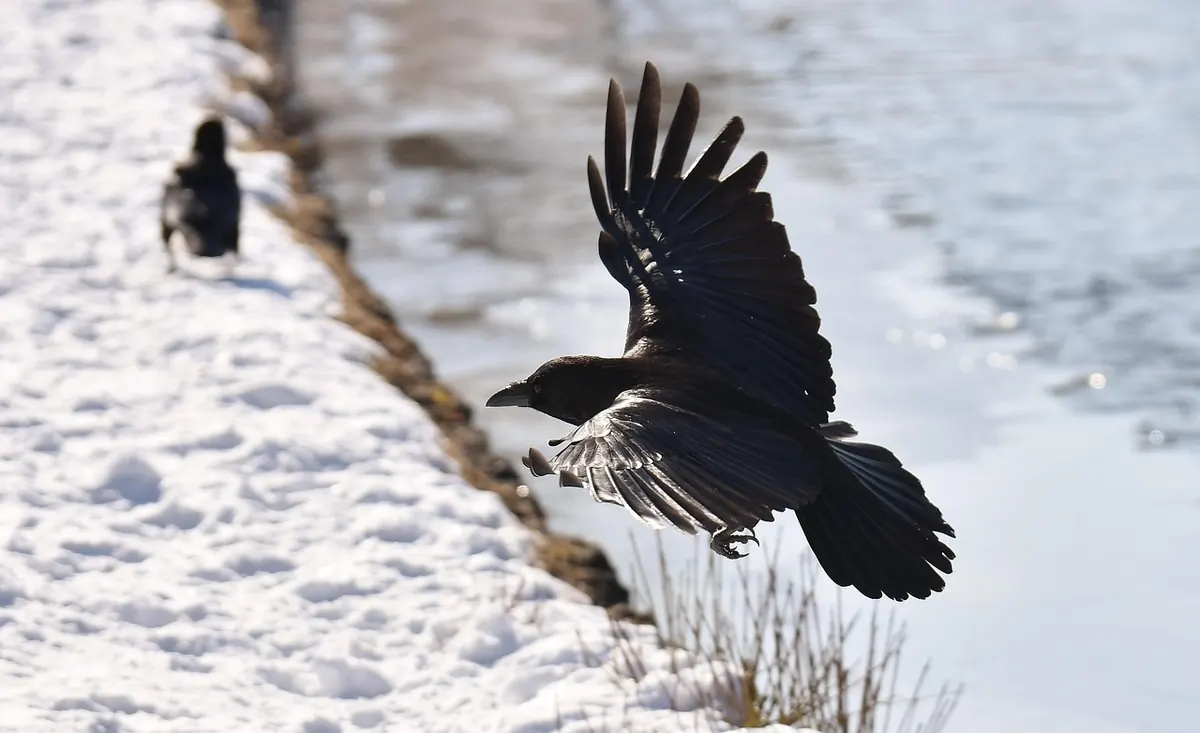
- Shape in flight: long, broad wings with splayed, fingered tips and a distinctly wedge-shaped tail, rather than the crow's neat fan.
- Build: heavy and thickset, with a thick bill and a shaggy throat that crows never show.
- Voice: a deep, resonant kronk, or a hollow knocking note. Nothing like a crow's flat caa.
- Behaviour: usually in pairs or family groups, spending long spells soaring. In late winter, watch for tumbling display flights — a bird half-closes its wings, drops, and rolls as it falls.
If you are unsure, wait for the call. On a still morning in a valley, a raven's voice carries for a considerable distance and settles the identification instantly.
Upland Strongholds
Ravens reach their greatest numbers in the hills of the north and west, where pairs hold large territories and often nest on remote crags. These are the sites to visit if you want more than a flypast.
Cairngorms and the eastern Highlands
The Glenmore area, the ski road above Aviemore and the quieter glens radiating east — Glen Affric and Glen Strathfarrar are excellent — hold good numbers. Scan the ridges from a car park or a low pass; ravens routinely ride the updraught along a ridgeline, tipping and calling as they go. Early morning is best, before walkers and vehicles push birds away from the roadside.
Eryri (Snowdonia) and the Welsh uplands
Cwm Idwal and the Nant Ffrancon pass are dependable, and the higher ground around Pen y Pass frequently produces birds circling below the summit ridges. Further south, the Elan Valley and the Brecon Beacons offer similar terrain with fewer people. Look for a pair working a crag line in a steady breeze.
The Lake District and northern England
Great Langdale, Wasdale and the fells around Haweswater all hold breeding pairs. In the north-east, the Northumberland coast and the Cheviot edges give you the option of combining ravens with seabirds in a single day.
Peak District and Yorkshire Dales
Ravens have recolonised parts of the southern Pennines, and the gritstone edges are the place to try. Stanage Edge, the Kinder plateau rim and Malham Cove all produce regular sightings, especially on windy days when birds soar along the escarpment rather than crossing it.
Coastal Cliffs and Islands
Sea cliffs suit ravens perfectly: nesting ledges, constant updraughts and a wide view. On a breezy spring day you may see birds hanging almost motionless against the cliff face.
Pembrokeshire and Anglesey
Strumble Head and the cliffs around Ramsey Island are classic, and the sea crossing to Ramsey in spring often produces ravens overhead. On Anglesey, South Stack and the slopes of Holyhead Mountain are reliable, with choughs and peregrines for company.
Cornwall, Devon and the far south-west
The Cornish cliff path and the granite tors of Dartmoor are the two best bets in the south-west. On Dartmoor, scan from a high tor on a clear, windy morning; on the coast, watch the clifftop fields where pairs feed.
West Scotland and the islands
The Trotternish ridge on Skye, Ardnamurchan, Mull and the Northern Isles all hold good populations. These birds are often remarkably tame by southern standards, but keep your distance from nest sites regardless.
Towns and Cities
Ravens have spread back into lowland Britain over recent decades, nesting on quarries, pylons, church towers and the occasional tall building. Cardiff, Bristol and the western fringes of several southern English towns now support breeding pairs, and wandering young birds turn up in unexpected places in autumn. If you live in one of these areas, a scan of the skyline at dawn is worth the effort.
The Tower of London ravens are a different proposition. They are captive birds, kept on site with restricted flight, so treat a visit as a cultural outing rather than a wildlife one — enjoyable, and a useful chance to study a raven at close range without binoculars.
Timing Your Visit
- January to March: the best window. Pairs display, tumble and call, and are conspicuous over their territories on fine, breezy days.
- March to May: nesting. Adults are quieter and often commute along fixed routes. Watch from a distance and never approach a nest.
- June to August: family parties are noisy and mobile, but adults moult and go quiet. Look for juveniles with paler, browner plumage.
- September to November: dispersing young birds wander, turning up on coasts, in lowland woods and around town edges.
- December: pairs re-form bonds, and clear, cold, breezy days give superb soaring conditions.
Practical Tips for a Good Day Out
Choose a windy, bright morning and head for high ground. Ravens use updraughts, so a ridge or clifftop in a fresh breeze beats a calm valley floor every time. Take binoculars — a 8x42 or 10x42 pair is plenty — and use your ears as much as your eyes. Learn the call before you go, and you will start finding birds you would otherwise have walked past.
Give nesting birds space. All wild birds, their nests and their eggs are protected by law in the UK, and deliberately disturbing a nesting raven is an offence. Avoid playback recordings close to a nest, keep to paths on cliff edges, and use a scope rather than your feet to get closer.
Finally, treat upland and coastal sites with the respect they deserve. Check the forecast, carry waterproofs and a map, and tell someone where you are going — mountain weather changes quickly, and these are often places with patchy phone signal. Get those basics right and a raven is one of the most rewarding birds in Britain to watch: enormous, intelligent, and entirely unmoved by your presence.
Photo: Alexas_Fotos / Pixabay